Design and print 3D containers that fit your drawer exactly.
Get back hours of print time and free spools of filament on containers that almost, but don't quite, fit your drawers.
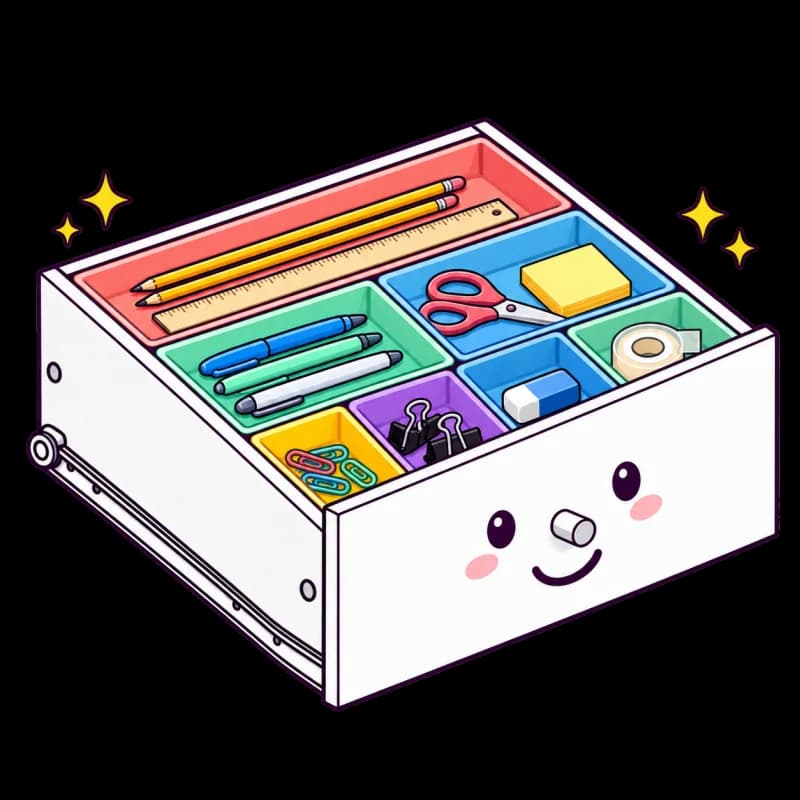
“I used to be the junk drawer. Paperclips and pencils scattered everywhere. Now I'm neat, tidy and filled with calming energy.”
Measure. Layout. Print.
Finish your first grid in 5 minutes.
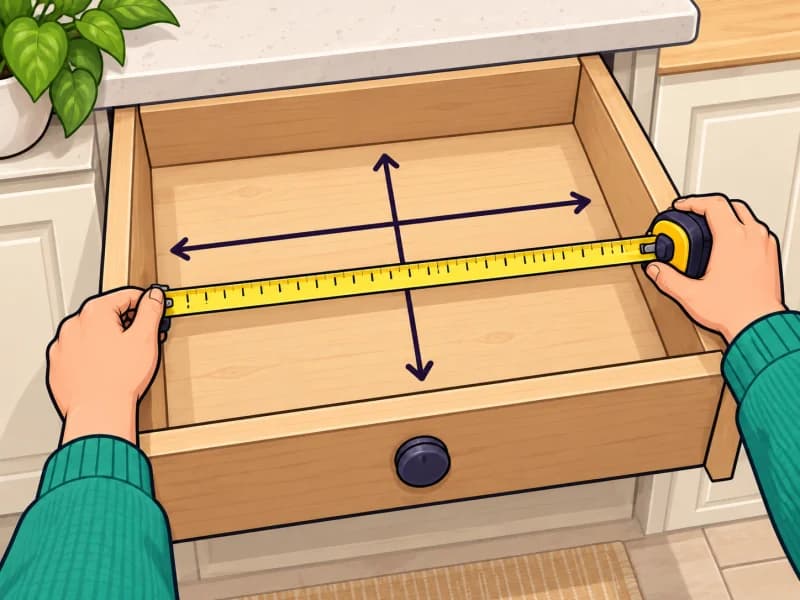
Measure
Grab a tape measure. Type in the width and depth of your drawer. That is the only measuring you will do.

Layout
Pick a grid. Drag out boxes where you want them. Big ones, small ones, whatever fits your stuff.
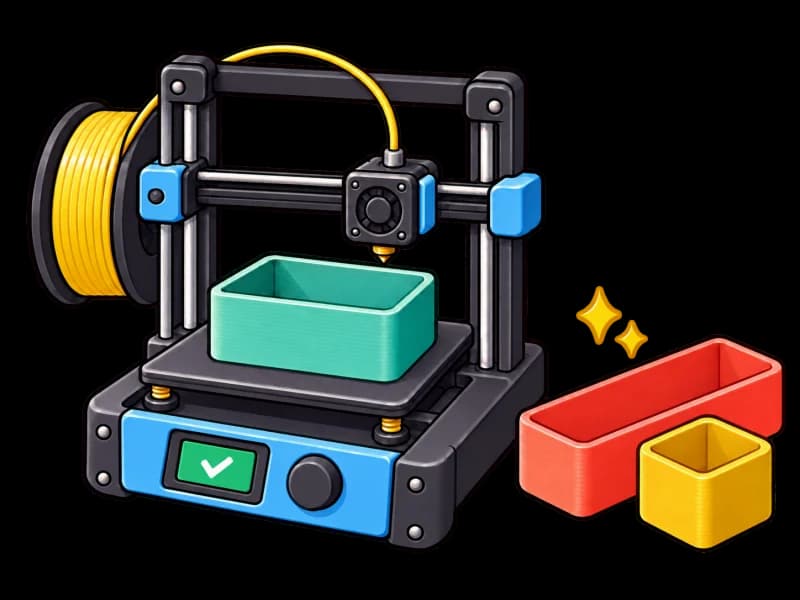
Download the files. Send them to your printer. Drop the containers in. Done.

It's all free, including the downloads
Design as many drawers as you like. Preview them in 3D. Download every STL file and print at home.
One day we might monetize but for now, it's all free.
How you get a perfect fit
You choose the gaps. We do the math.
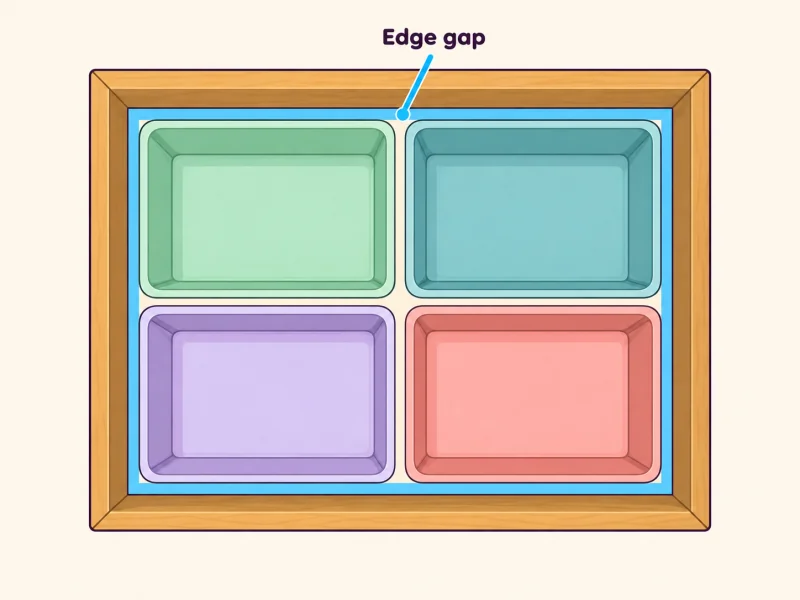
Set the edge gap
The space between the drawer walls and the outer containers.
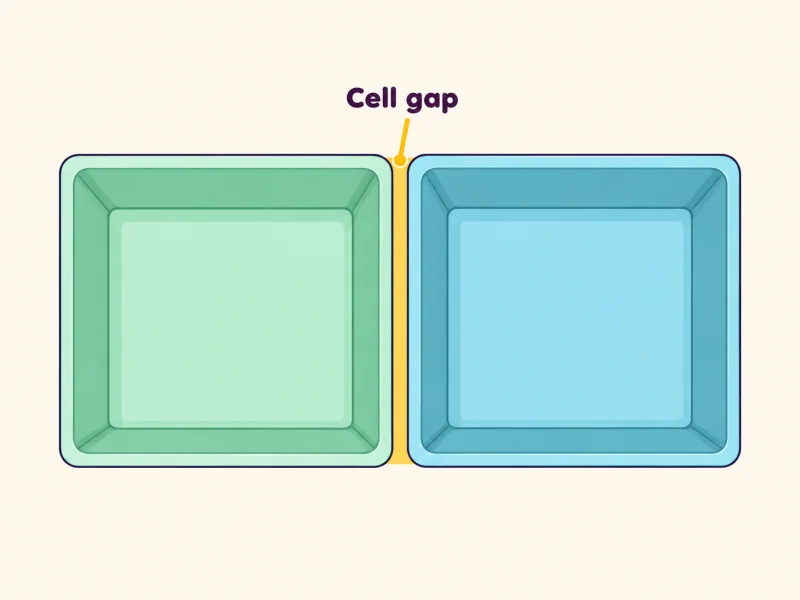
Set the cell gap
The space between neighbouring containers.
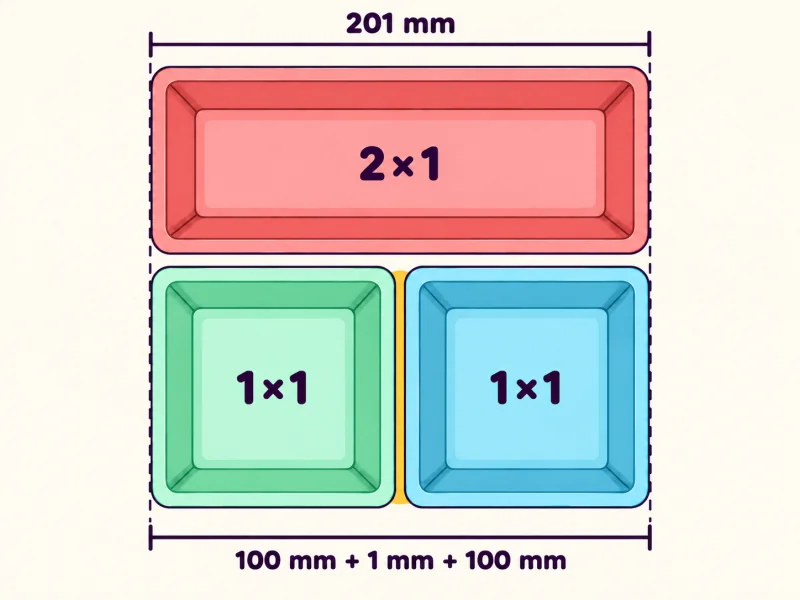
We work out every size
We calculate the container from the drawer, incorporating the gaps.
For example: a drawer 405 mm wide with 4 columns, a 1 mm edge gap and 1 mm cell gaps gives cells of exactly 100 mm. A 2x1 container comes out at 201 mm, two cells plus the gap in between.
Make the containers your own
Four adjustments to make your containers just right.
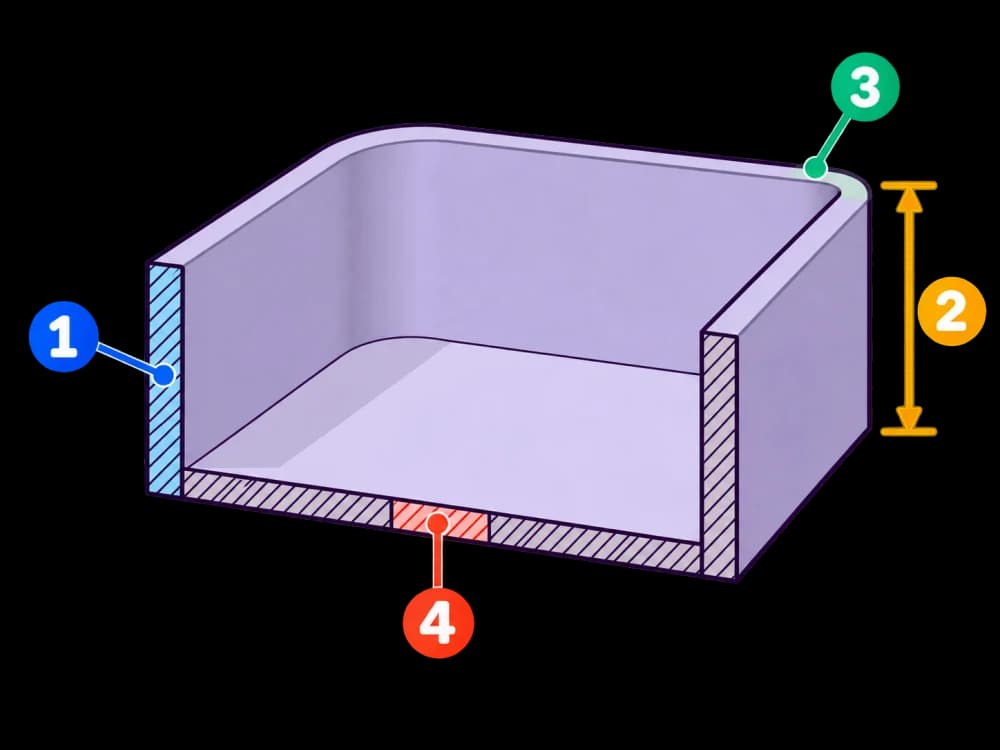
Wall thickness
How thick the four walls are. Thicker is stronger. Thinner saves filament and prints faster.
Height
How tall every container is. Pick a height that fits your stuff and your drawer.
Corner radius
How rounded the vertical corners are. Sharp for a crisp look. Rounded for friendly.
Floor thickness
How thick the floor is. A thicker floor stays solid when picked up and grips the print bed better.
Two kinds of grid
Stretch for an exact grid. Square if you want rotating containers.
Stretch
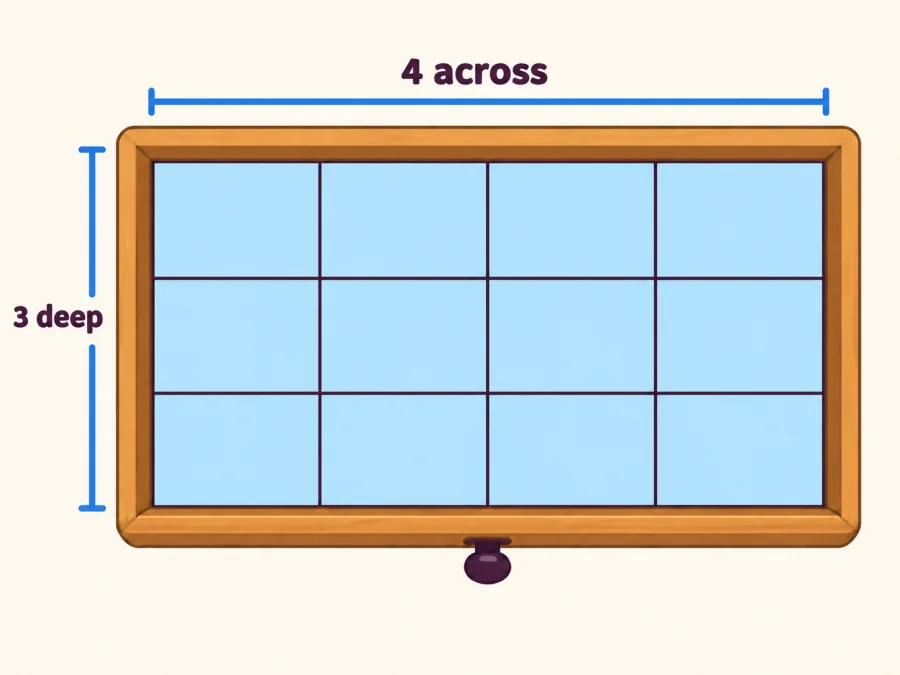
Tell us how many columns and rows. The cells stretch to fill the drawer exactly.
- No leftover strip.
- Cells are rectangles, so a 2x1 and a 1x2 are different parts.
- Best when you want the drawer full, edge to edge and you don't expect to rotate containers.
Square
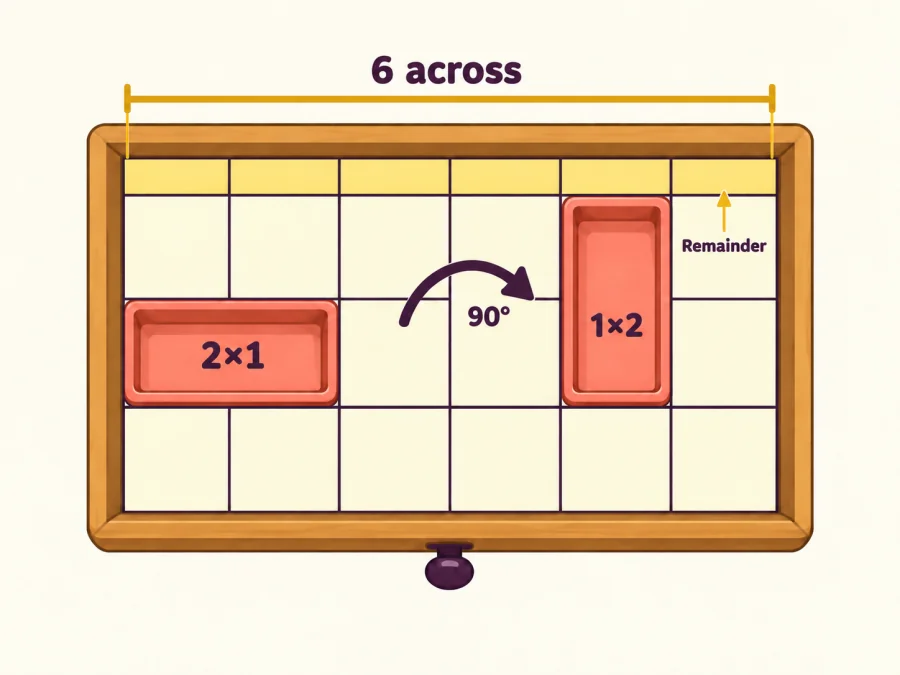
Every cell comes out a perfect square. A container then fits the same way turned a quarter turn.
- Containers can be rotated and still fit nidely
- Choose a specific size in mm, or choose how many grid cells across or deep
- The leftover strip can be filled with partial containers (good for thin stuff like rules or pencils)
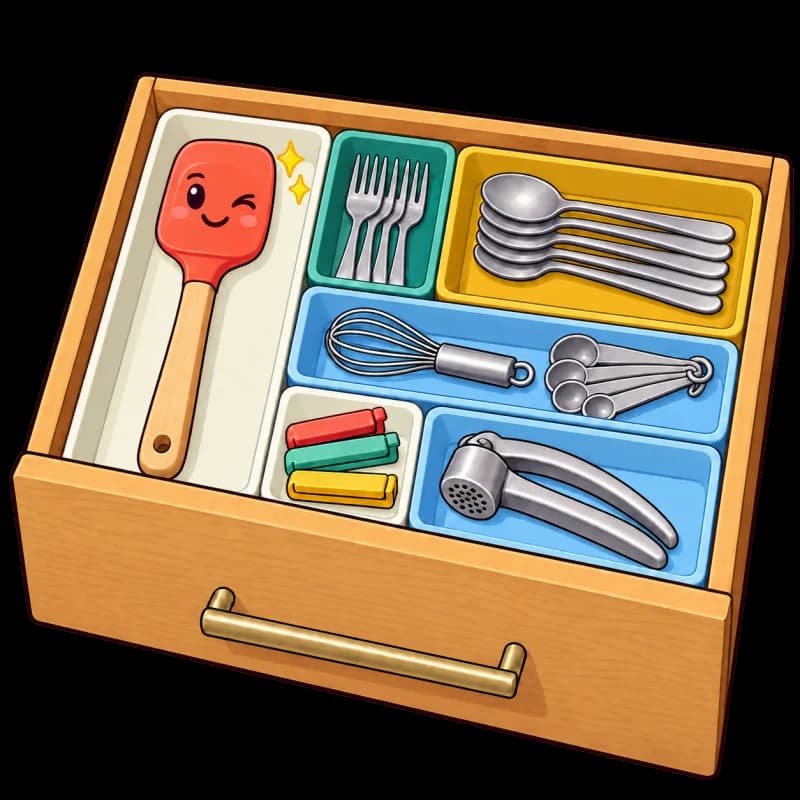
“I lay hidden, wedged under a garlic press for years. Now my home is clean and organized.”